
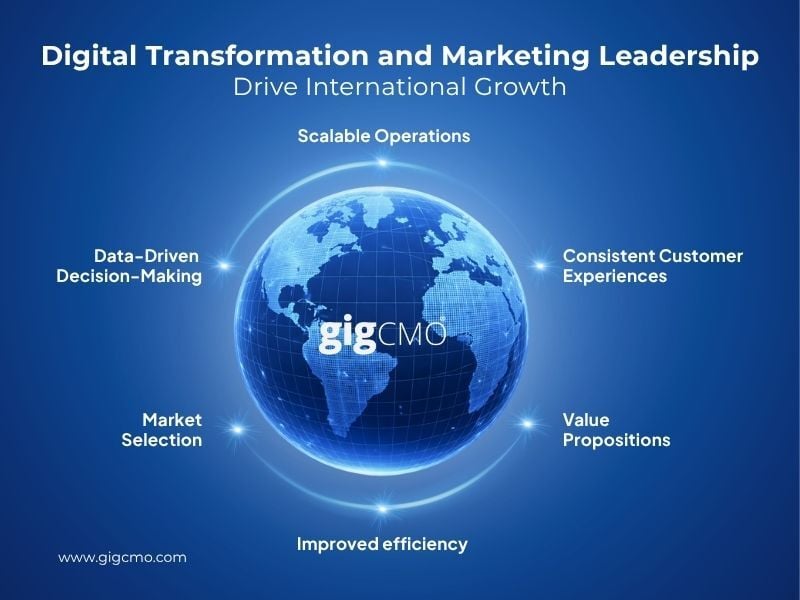
Businesses of all sizes are increasingly looking beyond domestic borders to drive growth, reach new customers, and remain competitive. However, international growth introduces complexity, from managing operations across regions to maintaining consistent customer experiences.
Digital transformation has become a critical enabler of international business growth. When done well, it allows organisations to scale efficiently, adapt quickly, and compete effectively in global markets.
What Digital Transformation Means for International Growth
Digital transformation is the integration of digital technologies into business operations as part of a broader strategy and culture. It is not about adopting individual tools in isolation, but about reshaping how a business operates, collaborates, and delivers value.
For international growth, digital transformation supports:
- Scalable operations across markets
- Consistent customer experiences
- Faster, data-driven decision-making
- Improved efficiency and coordination
- When aligned with business strategy, digital transformation becomes a foundation for sustainable global growth.
Why Most Digital Transformation Initiatives Fail
Despite its importance, digital transformation remains difficult to execute. According to McKinsey & Company, approximately 70% of digital transformation initiatives fail to meet their objectives, meaning only around 30% succeed.
This statistic highlights a critical issue: the challenge is not access to technology, but the ability to implement and embed change across the organisation.
What Are the Biggest Barriers to Digital Transformation?
Recognising the barriers to digital transformation is essential for overcoming them, particularly for organisations operating internationally.
1. Resistance to change
Employees and leaders may be reluctant to move away from familiar ways of working, especially when the purpose and benefits of transformation are unclear.
2. Siloed communication and collaboration
When teams work in isolation, digital initiatives become fragmented, leading to inefficiencies, duplication, and misaligned priorities.
3. Security and data protection concerns
As digital adoption increases, so does exposure to cyber risk. Weak security undermines trust, continuity, and confidence in transformation efforts.
4. Difficulty adopting new tools and processes
New systems often fail to deliver value when adoption is rushed, training is limited, or stakeholder buy-in is missing.
5. Poor technology decisions
Choosing tools that do not align with business needs or integrate with existing systems can slow progress and waste investment.
6. Rapidly evolving customer expectations
Customer behaviour change quickly in digital markets. Failing to adapt experiences and offerings risks losing relevance and competitiveness.
7. Limited time, budget, or resources
Digital transformation requires sustained investment. Resource constraints can delay progress or limit impact.
8. Lack of clear vision and strategy
Without a defined roadmap, transformation efforts lack focus and struggle to support long-term business goals.
9. Shortage of digital skills and expertise
Gaps in digital, data, and change-management capability reduce execution quality and speed.
10. Insufficient leadership commitment
Without strong leadership support, digital transformation initiatives struggle to gain momentum or scale.
Marketing Leadership as a Growth Enabler
Technology does not drive international growth in isolation. What many businesses lack is marketing leadership, the capability to align digital tools, teams, and investment with commercial objectives.
Effective marketing leadership ensures:
- Market selection is data-driven
- Value propositions are clear and differentiated
- Sales and marketing operate as one system
- Performance is measured consistently across markets
This approach is particularly powerful for international expansion, where clarity, consistency, and coordination are essential.
How Marketing Leadership Turns Digital Transformation into International Growth
Digital transformation is a core capability for international growth, but marketing leadership determines how effectively those capabilities are prioritised, coordinated, and converted into commercial results across markets.
1. Smarter Market Access and Expansion
Digital channels enable businesses to reach new markets without heavy physical investment. However, access alone does not equal growth.
Marketing leader guides where and how to enter, prioritising markets, sequencing expansion, and aligning digital channels with revenue potential to reduce risk and maximise return.
2. Data-Led Market Understanding and Personalisation
Digital platforms generate insight into customer behaviour across regions, revealing differences in needs, buying triggers, and expectations.
Marketing leaders help turn these insights into clear positioning, targeted messaging, and relevant local campaigns that improve engagement and conversion in each market.
3. Efficient, Scalable Go-To-Market Execution
Automation and integrated systems increase efficiency across international marketing operations, from campaign management to lead handling.
Marketing leaders help ensure these tools support growth objectives, aligning processes, budgets, and performance metrics with customer acquisition, retention, and lifetime value.
4. Consistent and Localised Customer Experience
Digital tools make it possible to localise content, languages, and engagement while operating at a global scale.
Marketing leaders help balance localisation with brand consistency, ensuring international customers receive relevant experiences without diluting brand identity.
5. Stronger Positioning, Credibility, and Trust
Digital visibility, customer reviews, and social presence influence trust in new markets.
Marketing leaders help shape how this visibility reinforces brand positioning, turning awareness into credibility and differentiation in competitive international environments.
6. Agility and Faster Market Response
Digital transformation allows organisations to respond quickly to changes in customer demand, regulation, or market conditions.
Marketing leadership enables coordinated decision-making, allowing teams to pivot messaging, channels, or market focus without losing strategic alignment.
What Businesses Need to Scale Internationally in a Digital-First World
International growth demands more than digital capability alone. It requires consistent, strategic marketing leadership that can prioritise opportunities, align teams, and translate digital transformation into measurable commercial results.
This is where gigCMO's playbook-driven model provides a distinct advantage. Built around a comprehensive and continually evolving playbook, gigCMO delivers scalable marketing leadership-as-a-service rather than reliance on a single individual. The model ensures consistency, transparency, and repeatable execution, while empowering internal teams through structured knowledge transfer.
gigCMO's approach adapts to each stage of business growth, from early-stage expansion to established international operations, combining a deep understanding of products, markets, and industries with a revenue-driven strategy and execution.
By operating as an extension of the business, gigCMO ensures marketing efforts remain aligned across regions and channels as complexity increases.
We believe that strong marketing leadership is the missing link between digital transformation and international growth. Contact us to learn how our playbook-driven model can support your international expansion.